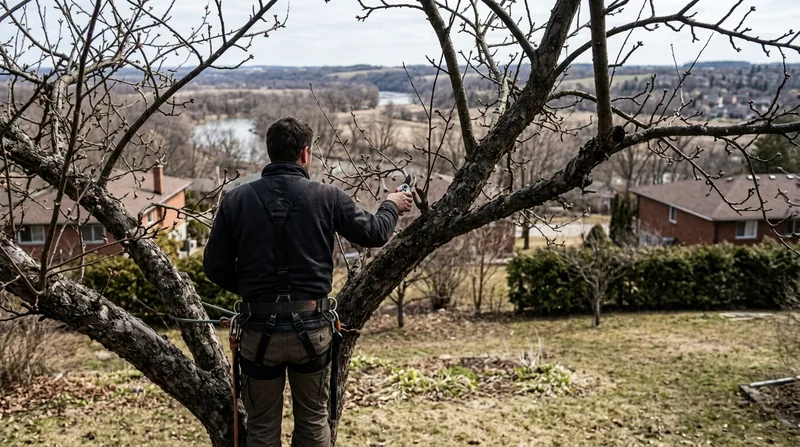




Mature apple, pear and plum trees across the Kitchener area often become overgrown, unproductive or hazardous after years of neglect. Fruit tree pruning in Kitchener restores structure, improves air circulation and brings old specimens back into reliable bearing. Our ISA Certified Arborists open the centre, remove water sprouts and dead wood, and shape the canopy so light reaches the developing fruit. Whether your trees are in a backyard ravine lot or a tight suburban garden accessible only through a standard gate, we work with the constraints of your property and the local climate to deliver a tree you can harvest from for decades to come.
Why fruit tree pruning matters in Kitchener
Fruit trees in the Kitchener area face unique pressures. in Kitchener and the surrounding area winters cause branch breakage and ice loading, while our clay soil and freeze-thaw cycles stress root systems. Unpruned trees develop dense canopies that trap moisture and invite fungal disease. Structural pruning opens the tree, reduces weight on weak crotches and removes crossing or rubbing branches before they become problems. A well-pruned apple or pear tree also bears more fruit of better quality because sunlight reaches the fruiting wood.
- Remove dead, diseased or crossing branches that weaken the tree.
- Open the centre to allow air and light penetration for fruit development.
- Cut back water sprouts and vigorous upright growth competing with the main scaffold.
- Reduce overall height and spread to fit your garden and prevent wind damage.
- Shape the tree to a balanced, manageable form for safe harvesting.
Pruning also prevents the common cycle where an old tree bears heavily one year, exhausts itself and produces little the next. Regular pruning evens out production and extends the productive life of the tree.
Local insight: A neglected 40-year-old apple tree in Kitchener can take two to three pruning seasons to restore, but homeowners typically see fruit return within one season of opening the canopy. Trees in Cambridge and Woolwich neighbourhoods on clay soil benefit especially from improved drainage and light after pruning.
How we prune fruit trees in the Kitchener area
Our pruning method depends on the species, age and condition of your tree. Young trees receive formative pruning to establish a strong structure; older or neglected trees may need renewal pruning over multiple years. We assess each tree for disease, pest damage and structural weakness before cutting. Work is done during dormancy (late fall through late winter) when the tree is not actively growing and disease risk is lowest.
- Make clean cuts just outside the branch collar to promote rapid healing.
- Remove all deadwood, broken branches and crossing limbs in one pass.
- Thin the canopy by removing smaller branches from the interior, keeping the main scaffold.
- Cut back vigorous upright shoots and water sprouts to redirect energy to fruiting wood.
- Reduce height and spread carefully to avoid shocking the tree or creating excessive new growth.
- Haul away all pruning debris or arrange chipping through our wood chipping service.
We work safely in tight backyards and on properties with difficult access, using rope and pulley systems to lower branches through gates and around structures. If your tree is near a private electrical service entrance, we maintain the required approach distances and never work on the public distribution network.
Real example: A 35-year-old Bartlett pear in Bridgeport had become 8 metres tall with a dense, tangled crown. We removed 30 percent of the branch length over two winters, opening the centre and reducing height to 6 metres. Fruit size improved by the second season, and the tree is now manageable from a ladder.
Pruning techniques for apple, pear and plum
| Technique | Description | Best for |
|---|---|---|
| Formative pruning | Establish a strong scaffold of 3 to 5 main branches and a clear central leader in young trees. | Trees under 10 years old; prevents structural problems later. |
| Renewal pruning | Remove up to one-third of the canopy over multiple seasons to restore shape and productivity. | Neglected or overgrown trees; avoids shocking the tree. |
| Thinning cuts | Remove entire branches at their point of origin to reduce canopy density and improve light penetration. | Opening dense crowns; improving fruit size and colour. |
| Heading back | Cut back branch tips to an outward-facing bud to control height and encourage side branching. | Reducing overall size; managing vigorous upright growth. |
| Water sprout removal | Cut vigorous upright shoots at their base to prevent them competing with fruiting wood. | Trees after heavy pruning or damage; maintaining fruit production. |
Each technique serves a specific goal. Thinning cuts are preferred over heading back because they remove entire branches and allow the tree to heal more naturally. We combine methods based on what your tree needs to thrive.
Timing and seasonal considerations
Structural pruning and removal of dead wood is best done in dormancy, from late fall through late winter, when the tree is not actively growing and disease spores are inactive. Winter pruning also allows us to see the tree's true branch structure without foliage obscuring it. Avoid heavy pruning in spring or summer, as it can stimulate excessive water sprout growth and stress the tree during the growing season. Light removal of broken or diseased branches can be done year-round.
In the Kitchener area, ice storms and winter windstorms often break branches, creating urgent pruning needs. We respond quickly to remove hazardous limbs and prevent further damage. If your tree has suffered storm damage, a professional assessment guides whether removal or pruning is the best solution. Contact us at (548) 490-1230 for emergency tree removal or assessment.
Permits and local regulations in Kitchener
Fruit tree pruning on your own property does not typically require a municipal permit in Kitchener or the surrounding municipalities. However, if your tree is very large, located in a heritage district or subject to a tree preservation bylaw, it is worth confirming with the City before work begins. Our arborists are familiar with local requirements and can advise you on whether a permit or arborist report is needed for your situation.
All work is carried out by a fully insured company. We haul away pruning debris or arrange chipping and mulching as part of the service. If your tree is within approach distance of a private electrical service entrance, we maintain safe clearance and never contact the public distribution network operated by your local utility or Hydro One.
For a free estimate and to discuss your tree's needs, call us at (548) 490-1230 or visit our contact page. We serve Kitchener, Cambridge, Woolwich, Wellesley, North Dumfries and the Region of Waterloo. Our pricing page outlines typical costs for fruit tree pruning and other services.
Prices Fruit Tree Pruning in Kitchener — Indicative pricing
| Service | Price | Details |
|---|---|---|
| Small fruit tree (up to 6 metres) | From $165 | Pruning and shaping of young or small mature apple, pear or plum trees |
| Medium fruit tree (6 to 10 metres) | From $275 | Structural pruning, deadwood removal and canopy opening |
| Large or neglected tree (over 10 metres) | From $425 | Renewal pruning over one to three seasons; requires site assessment |
| Debris removal and chipping | Included | Haul-away or wood chipping through our service |
| Travel and site visit | Included | in Kitchener and the surrounding area |
| Free estimate | No charge | Response within 24 hours at (548) 490-1230 |
Indicative prices; free, personalized estimate within 24h at (548) 490-1230.